Global buyers are entering 2026 with stricter demands for efficiency, reliability, and documented lifecycle value. Grand View Research estimates that the global industrial gearbox market was worth approximately USD 28 billion in 2023. Its forecast also indicates steady growth through 2030. This expansion reflects rising investment in manufacturing, renewable energy, material handling, and automated production lines. Gearbox Solutions must therefore address more than torque requirements. They must fit real operating conditions.
Wind power adds further pressure. The Global Wind Energy Council reported more than 117 gigawatts of new wind capacity installed worldwide in 2023. Each turbine depends on precise speed conversion, controlled vibration, and dependable lubrication. Small design weaknesses can become expensive failures inside a nacelle several metres above ground. Buyers should examine rated torque, service factor, thermal limits, sealing design, noise levels, and spare-parts availability. ISO 6336 calculations and AGMA-based documentation can strengthen technical comparisons, but paperwork alone cannot prove field performance.
The picture is not perfectly clean. Supplier claims sometimes exceed independently verified results. Country-specific standards, grid conditions, installation quality, and maintenance skills can change outcomes. That judgment is uncomfortable. A lower purchase price may create higher downtime, energy losses, or replacement costs later. This 2026 guide evaluates Gearbox Solutions through a practical procurement lens, combining published market evidence with application-level questions. It considers planetary, helical, bevel, worm, and custom gearbox designs for global buyers. The goal is not to name one universal winner. It is to identify the most defensible choice for each load, environment, budget, and service expectation.
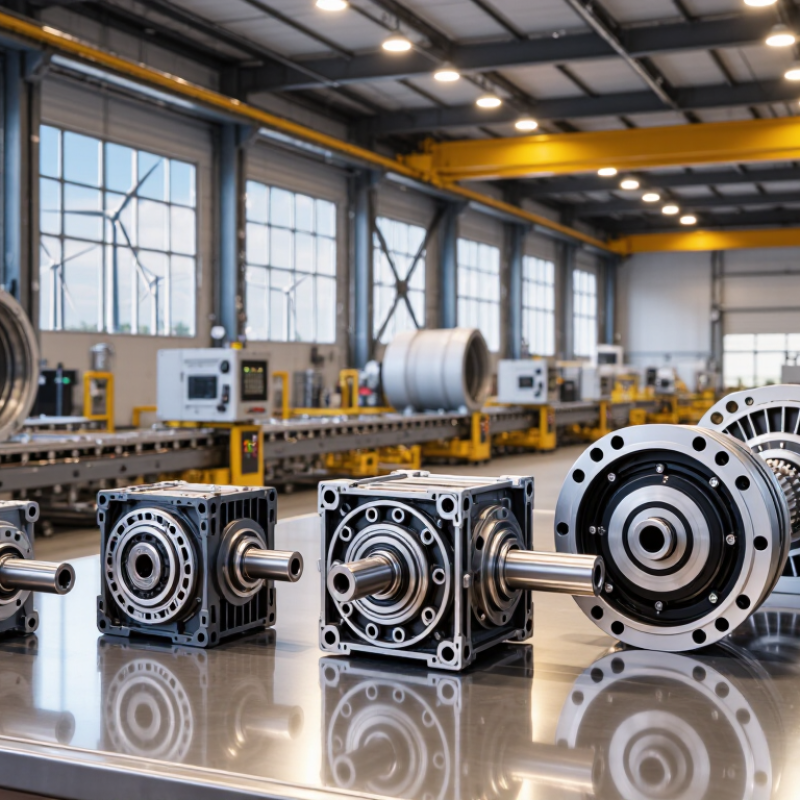
A gearbox is a mechanical system that transfers power between a motor and a machine. It changes speed, torque, or rotation direction to match the working task. In practical terms, a fast motor can turn a slow conveyor with greater pulling force. The result is mechanical leverage.
Inside the housing, gears, shafts, bearings, seals, and lubricant must work together under pressure. A small alignment error can create heat, vibration, and early wear.
In 2026, gearbox selection matters because energy costs, automation, and production demands continue to rise. An efficient unit can reduce motor strain and unnecessary power consumption. Modern buyers also expect condition monitoring, clearer service records, and dependable operation across different climates.
A gearbox used near a dusty quarry needs different sealing than one installed in a clean indoor facility.
Temperature, shock loads, duty cycles, noise limits, and available maintenance skills all affect the correct specification.
Global buyers should examine torque ratings under real operating conditions, not only catalogue figures. Ask for material details, test documentation, lubrication guidance, and replacement-part availability.
Field technicians often discover that poor installation causes more failures than weak gear design. That point is easy to overlook.
No gearbox is perfect, either. Published efficiency can change with load, temperature, and maintenance quality. A careful buyer should compare the full operating cost, including downtime, inspection time, shipping, and local technical support. Clearance, mounting accuracy, and overlooked vibration still deserve attention.
2026 Best Gearbox Solutions for Global Buyers?
Key Gearbox Types and Their Industrial Applications
The gearbox market is becoming more application-specific. MarketsandMarkets estimates global demand could rise from about USD 31 billion in 2023 to over USD 41 billion by 2028. Buyers now compare efficiency, service life, noise, and maintenance access. Purchase price alone is a weak filter.
Helical gearboxes suit conveyors, mixers, and packaging lines. Their parallel shafts support steady torque and efficient continuous operation. Bevel-helical units change the power direction, making them useful in crushers, elevators, and material-handling systems. Planetary gearboxes deliver high torque within a compact housing. They fit wind turbines, mobile equipment, and heavy-duty drives. The Global Wind Energy Council reported more than 117 GW of new wind capacity in 2024. This growth keeps demanding strict gearbox control, lubrication, and condition monitoring.
Worm gearboxes remain practical for low-speed lifting and positioning. However, sliding contact can create more heat and lower efficiency. Cycloidal designs handle shock loads well, especially in robotics and precision machinery. Selection should follow load cycles, output speed, ambient temperature, and alignment quality. ISO 6336 calculations can support load-rating decisions, but field conditions still matter. A clean spreadsheet cannot predict every vibration problem. I have seen oversized units waste energy, while undersized units fail early. Global buyers should also check local service skills, spare-part availability, enclosure protection, and documentation. A technically excellent gearbox can become a poor investment when maintenance support is too distant.
Helical, bevel, planetary and cycloidal gearboxes generally provide high efficiency for conveyors, robotics, automation and heavy-duty machinery. Worm gearboxes offer compact, economical speed reduction but typically have lower efficiency, especially at high reduction ratios. Actual performance varies with gear ratio, load, lubrication, mounting and operating conditions.
2026 Best Gearbox Solutions for Global Buyers?
How to Evaluate Gearbox Performance and Reliability
A reliable gearbox is judged in real operating conditions, not by torque ratings alone. Check rated torque, service factor, speed range, thermal capacity, and efficiency at your actual duty cycle. The U.S. Department of Energy reports that motor systems consume about 70% of industrial electricity. Small transmission losses can therefore become costly over time. Ask for tested efficiency curves, not general claims.
Measure vibration, noise, housing temperature, backlash, and oil condition during commissioning. Record the baseline after stabilisation. A rising vibration trend matters more than one isolated reading. ISO 20816 can guide vibration assessment, while ISO 281 supports bearing-life calculations. These standards improve consistency, but they do not replace field judgment. A clean datasheet can still hide poor alignment or unsuitable lubrication.
Tips: Request factory test records, material certificates, and a clear maintenance schedule. Compare performance at low, normal, and peak loads. Check sealing for dust, humidity, and washdown exposure. Use oil analysis after the initial running period. The DOE sourcebook also recommends alignment, lubrication, and preventive monitoring for motor-driven systems. I would not accept a “maintenance-free” promise without service limits, spare-part planning, and documented failure data. Temperature changes matter. So does installation quality.
Global buyers need more than a gearbox with attractive performance numbers. A reliable selection begins with recognized quality standards, verified calculations, and clear application data. Ask for load capacity, speed range, service factor, noise limits, and testing records. These details reduce costly mismatches during installation. Small errors matter.
Material selection should match the working environment. Hardened alloy steel gears can support heavy industrial loads when properly heat-treated and inspected. In coastal or humid locations, corrosion-resistant housings and suitable seals become essential. For food-processing applications, surfaces may require hygienic finishes and approved materials. Manufacturing quality also depends on machining accuracy, alignment control, lubrication, and final run testing.
Tips: Request material certificates, dimensional reports, heat-treatment records, and test results before approval. Compare these documents with the required international standards. Keep a sample gearbox for dimensional checks. Real data matters.
One practical issue is that supplier documents may use different units or testing methods. This can create confusion, even among experienced purchasing teams. A careful buyer should confirm tolerances, mounting dimensions, shaft details, and inspection responsibility in writing. Yet no specification is perfect. Revise the checklist after field feedback, especially when temperature, vibration, or maintenance access differs from the original plan.
2026 Best Gearbox Solutions for Global Buyers?
How to Select the Best Gearbox Supplier Worldwide
Start with the load.
A reliable supplier should examine torque, speed, duty cycle, mounting position, and operating temperature. Do not select a gearbox from a catalogue ratio alone. A conveyor running eight hours daily needs different protection from a short-cycle packaging machine. Ask for a written sizing calculation, efficiency data, noise limits, and service-factor assumptions.
Check the supplier’s engineering depth before discussing price. Request material specifications, heat-treatment records, dimensional drawings, and inspection reports. Practical suppliers can explain bearing selection, sealing methods, backlash, and lubrication intervals in clear language. They should also provide prototype testing or sample-unit results. Small details matter, such as a drain plug that remains accessible after installation.
Global purchasing adds another layer. Confirm production capacity, quality-control procedures, export documentation, spare-parts availability, and response times across time zones. A supplier with regional technical support can reduce costly downtime. Verify whether replacement parts have stable identification and traceability. Ask how design changes are recorded. Vague answers deserve caution.
Avoid choosing only by the lowest quotation. I have seen purchasing plans underestimate corrosion, misread peak torque, or ignore installation alignment. These errors often appear after delivery. A better process compares total operating cost, expected service life, warranty terms, and technical communication. Still, no supplier is perfect. Leave room for independent inspection and a second engineering review before approving volume production.
| Gearbox Solution | Typical Efficiency | Common Ratio Range | Typical Torque Capability | Key Strengths | Typical Applications | Important Selection Requirements | Supplier Evidence to Request |
|---|---|---|---|---|---|---|---|
| Helical Gearbox | Approximately 90–98% | About 1.5:1 to 20:1 per stage configuration | Approximately 50–100,000 N·m, depending on frame size and stages | High efficiency, low noise, compact inline construction, and reliable continuous-duty performance | Conveyors, mixers, packaging equipment, process machinery, pumps, and general industrial drives | Confirm service factor, output speed, radial load, axial load, duty cycle, mounting position, and ambient temperature | Load calculation, efficiency data, noise test results, dimensional drawings, material specifications, and endurance-test records |
| Bevel-Helical Gearbox | Approximately 90–97% | About 3:1 to 200:1 in multi-stage designs | Approximately 100–100,000 N·m, depending on design and size | Right-angle power transmission, strong torque density, high mechanical efficiency, and flexible installation | Material handling, elevators, conveyors, wastewater equipment, mining machinery, and production lines | Check shaft orientation, permissible overhung load, start-up torque, braking loads, and required protection rating | Right-angle load calculations, bearing-life calculations, thermal ratings, sealing details, and test certificates |
| Worm Gearbox | Approximately 50–90%, depending on ratio and design | About 5:1 to 100:1 in common configurations | Approximately 10–20,000 N·m, depending on size and reduction ratio | Low cost, compact right-angle layout, high reduction in a single stage, and low-noise operation | Gates, small conveyors, packaging machines, lifting devices, positioning systems, and light industrial equipment | Evaluate heat generation, duty cycle, self-locking claims, lubrication, starting efficiency, and back-driving conditions | Thermal capacity, efficiency at the required ratio, lubrication instructions, allowable duty cycle, and back-driving test data |
| Planetary Gearbox | Approximately 94–98% | About 3:1 to 100:1, with higher ratios in multi-stage units | Approximately 100–1,000,000 N·m, depending on size and stage configuration | Very high torque density, compact dimensions, strong torsional stiffness, and balanced load distribution | Wind-energy equipment, mobile machinery, robotics, heavy conveyors, marine drives, and high-load automation | Confirm peak torque, shock loads, torsional stiffness, bearing loads, thermal capacity, and required backlash | Planet-load distribution analysis, torsional stiffness data, bearing calculations, fatigue-life calculations, and factory test results |
| Cycloidal Gearbox | Approximately 85–95% | About 6:1 to 87:1 in common commercial designs | Approximately 20–60,000 N·m, depending on frame size | High shock-load resistance, low backlash, strong overload capability, and long service life under intermittent impact | Robotics, indexing tables, welding equipment, conveyors, machine tools, and heavy-duty positioning systems | Review backlash, repeated peak torque, acceleration and deceleration, mounting rigidity, and lubrication interval | Backlash measurement, impact-load test data, fatigue calculations, output-bearing capacity, and maintenance schedule |
| Precision Planetary Gearbox | Approximately 95–98% | About 3:1 to 100:1 | Approximately 10–10,000 N·m, depending on size and precision class | Low backlash, high repeatability, high torsional rigidity, and good compatibility with servo motors | Robotic joints, CNC equipment, semiconductor tools, inspection systems, and automated assembly | Specify backlash, positioning accuracy, torsional stiffness, emergency-stop torque, motor inertia, and duty profile | Backlash certificate, torsional-stiffness curve, runout data, servo-sizing calculation, and precision inspection report |
| Shaft-Mounted Gearbox | Approximately 90–97% | About 10:1 to 60:1 in common industrial arrangements | Approximately 100–20,000 N·m, depending on frame size | Simple conveyor installation, reduced foundation requirements, compact layout, and easy replacement | Bulk handling, belt conveyors, feeders, crushers, agricultural machinery, and material-processing lines | Check hollow-shaft dimensions, torque-arm loads, belt pull, alignment, backstop requirements, and installation access | Shaft-bore tolerances, torque-arm specifications, backstop test results, installation drawings, and spare-parts list |
| Stainless-Steel or Hygienic Gearbox | Approximately 90–97%, depending on internal gearing | About 3:1 to 200:1, depending on gear arrangement | Approximately 50–10,000 N·m, depending on design | Corrosion resistance, cleanable surfaces, improved washdown suitability, and reduced contamination risk | Food processing, beverage production, pharmaceutical equipment, chemical handling, and outdoor washdown areas | Specify cleaning chemicals, water pressure, temperature, corrosion exposure, sealing system, and hygienic design requirements | Material certificates, ingress-protection test results, surface-finish data, seal compatibility, and washdown validation |
| Global Supplier Evaluation | Not applicable | Not applicable | Must match calculated continuous and peak torque | Reduces technical, logistical, quality, and after-sales risk in international purchasing | Worldwide OEM projects, replacement programs, system integrators, distributors, and multi-site industrial operations | Assess engineering support, documented quality procedures, production capacity, lead time, export experience, spare parts, warranty, and communication response | Request technical drawings, quality certificates, inspection plans, sample reports, production lead-time commitment, warranty terms, and references for comparable applications |
Note: The performance figures are typical engineering ranges for preliminary comparison only. Actual efficiency, ratio, torque, service life, noise, and environmental capability depend on gearbox size, gear geometry, lubrication, operating speed, load profile, mounting arrangement, and supplier-specific design validation.
A gearbox transfers power between a motor and a machine. It changes speed, torque, or rotation direction. A fast motor can drive a slower conveyor with greater pulling force. Inside, gears, shafts, bearings, seals, and lubricant work under pressure. Small alignment errors create heat and vibration.
Energy costs and automation continue to influence equipment decisions. An efficient gearbox can reduce motor strain and wasted power. Buyers also expect monitoring, service records, and dependable operation. The correct choice depends on climate, duty cycle, noise, and maintenance skills. The cheapest option may become expensive later.
Check torque, service factor, speed range, thermal capacity, and efficiency. Use actual operating conditions, not catalogue figures alone. Compare performance at low, normal, and peak loads. Measure vibration, noise, housing temperature, backlash, and oil condition. A rising vibration trend deserves attention.
Request factory test records, material details, and dimensional drawings. Ask for efficiency curves under realistic loads. Review lubrication instructions and maintenance intervals. Confirm replacement-part availability and identification methods. Clear documents matter. Vague answers deserve caution.
Dusty sites need stronger sealing than clean indoor facilities. Humidity and washdown exposure also influence seal selection. Temperature changes can affect lubricant performance and housing expansion. A quarry conveyor may face shock loads and abrasive dust. A short-cycle machine may need different protection.
Poor alignment can cause vibration, heat, seal damage, and early bearing wear. Check mounting accuracy, clearance, shaft position, and fastening. Record baseline readings after the gearbox stabilises. Installation mistakes may cause more failures than weak gear design. That possibility is easy to miss.
Examine engineering capability, production capacity, and quality-control procedures. Request sizing calculations based on torque, speed, duty cycle, and mounting position. Check export documents, spare parts, inspection support, and response times. Regional technical assistance can reduce downtime. Price alone is not enough.
Include purchase price, energy use, inspections, shipping, downtime, and maintenance labor. Consider expected service life and local technical support. Review warranty conditions and documented failure information. An efficiency claim may change with load, temperature, and maintenance quality. No gearbox is perfect. I would still seek an independent engineering review.
In 2026, Gearbox Solutions remain essential for converting motor speed and torque into controlled, reliable motion across manufacturing, energy, transportation, agriculture, and material-handling systems. This overview explains what a gearbox is, why efficiency, durability, noise control, and maintainability matter, and how different designs—such as helical, planetary, bevel, worm, and inline gearboxes—serve distinct industrial applications. Selecting the right type depends on load requirements, operating speed, installation space, duty cycle, environmental conditions, and expected service life.
The article also outlines practical methods for evaluating gearbox performance and reliability, including torque capacity, transmission efficiency, thermal behavior, vibration, lubrication, and maintenance needs. Global buyers should consider recognized technical standards, material quality, manufacturing precision, testing procedures, documentation, and compatibility with local regulations. Finally, the best supplier should offer consistent quality control, engineering support, customization, transparent communication, dependable delivery, spare-parts availability, and responsive after-sales service. A structured comparison of technical and commercial factors helps buyers achieve safe, efficient, and cost-effective long-term performance.
