2026 Top Precision Gear Motor Types for Global Buyers
Global buyers entering 2026 need more than a catalog comparison. They need a clear view of torque, backlash, efficiency, noise, duty cycle, and serviceability. The Precision Gear Motor market is expanding alongside automation, robotics, medical equipment, packaging, and warehouse systems. The International Federation of Robotics reported 541,302 industrial robots installed worldwide in 2023, a 10% annual increase. Each robot depends on compact, repeatable motion. That demand directly influences motor and gearbox selection.
MarketsandMarkets and Grand View Research both identify continued growth in gear motors and precision motion-control systems. Their findings point toward stronger demand for planetary, harmonic, cycloidal, and spur gear designs. Yet market reports cannot replace application testing. A motor moving a surgical instrument faces different risks from one driving a conveyor roller.
Rainer Blickle, former CEO of Harmonic Drive SE, once stated, “Precision is never achieved by the gearbox alone; it is designed into the complete motion system.” That principle remains practical. A high-ratio gearbox may deliver impressive positioning, but poor alignment, thermal expansion, or unstable control tuning can weaken the final result. Small errors become visible.
This 2026 guide compares the leading Precision Gear Motor types for international buyers. It considers performance, maintenance, integration, customization, and total ownership cost. The categories are useful, but not perfect. Real machines often combine several technologies. Careful buyers should question impressive specifications, request verified test data, and evaluate performance under actual load conditions.
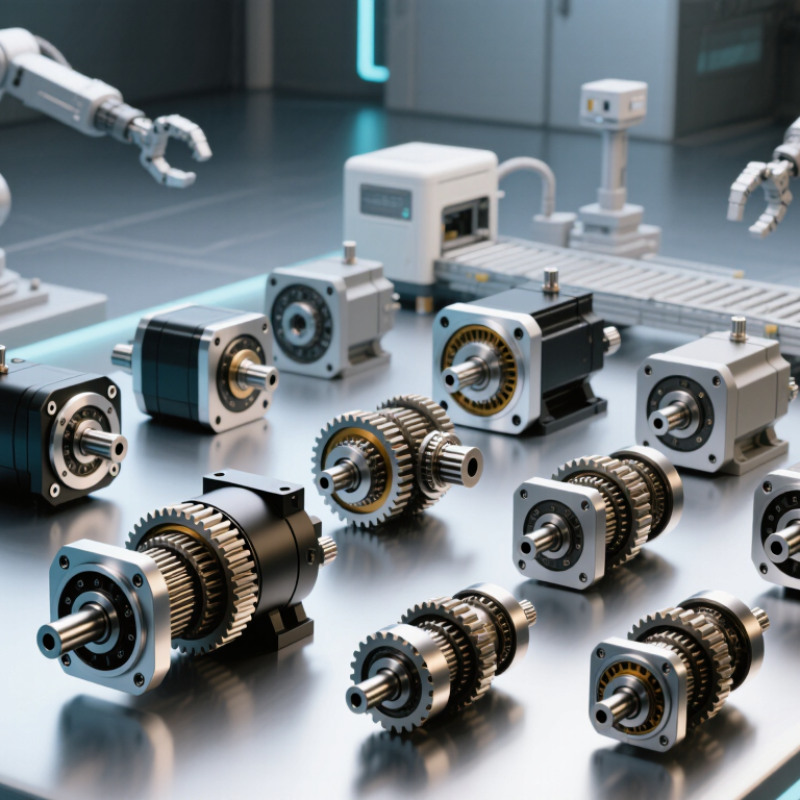
What Precision Gear Motors Are and How They Work
Precision gear motors combine an electric motor with a gearbox designed for controlled speed, torque, and movement. The motor creates rotational force. The gearbox then reduces speed and increases usable torque through matched gears.
A small motor may spin at 3,000 revolutions per minute. A reduction gearbox can deliver slower output with stronger turning force. This makes the unit suitable for robotic joints, medical instruments, packaging equipment, and compact conveyor systems. An encoder may track shaft position and speed. The controller compares that feedback with the target command, then adjusts power in real time.
Precision is not an absolute term. It depends on backlash, gear tolerances, temperature, load, and control quality. A motor that performs accurately in a laboratory may behave differently beside a vibrating machine. I have also seen selection errors caused by focusing only on rated torque. Starting torque, duty cycle, mounting position, noise, and expected service life deserve equal attention. A planetary gearbox often offers high torque density, while a worm gearbox may provide useful speed reduction but lower efficiency. Neither design is automatically better. Buyers should review measured data, test conditions, and maintenance requirements before approving a specification. Small details matter.
2026 Top Precision Gear Motor Types for Global Buyers - What Precision Gear Motors Are and How They Work
Precision gear motors combine an electric motor with a reduction gearbox to deliver controlled speed, increased torque, and repeatable positioning. The representative values below vary according to size, materials, lubrication, manufacturing tolerance, load, and operating conditions.
| Gear Motor Type | How It Works | Typical Reduction Ratio | Typical Backlash | Typical Efficiency | Main Advantages | Common Applications | Buyer Considerations |
|---|---|---|---|---|---|---|---|
| Planetary Gear Motor | Planet gears rotate around a central sun gear while engaging with an outer ring gear. Multiple stages provide higher reduction. | 3:1–100:1 | About 1–15 arcmin, depending on precision class | Approximately 85–97% | High torque density, compact size, good torsional stiffness, balanced load sharing, and broad speed capability. | Robotics, CNC equipment, servo axes, packaging machinery, automated handling, and medical equipment. | Check rated output torque, peak torque, thermal capacity, bearing load, allowable input speed, and the specified backlash grade. |
| Harmonic Drive / Strain-Wave Gear Motor | A flexible spline deforms through an elliptical wave generator and engages with a rigid circular spline. The tooth-count difference creates large reduction in one stage. | 30:1–160:1 | Typically below 1 arcmin in precision configurations | Approximately 70–90% | Very low backlash, high positioning accuracy, high reduction in one stage, and compact coaxial construction. | Robot joints, collaborative robots, semiconductor equipment, camera positioning, and precision motion platforms. | Evaluate torsional stiffness, allowable moment load, bearing arrangement, service life, efficiency at operating speed, and sensitivity to overload. |
| Cycloidal Gear Motor | An eccentric input drives cycloidal discs whose lobes engage with fixed pins. The rolling contact distributes load across several points. | 10:1–100:1 | About 1–10 arcmin | Approximately 80–92% | High shock-load capacity, strong overload resistance, good torque density, and relatively long service life under demanding loads. | Industrial robots, conveyors, mixers, machine tools, actuators, and heavy-duty automation. | Confirm vibration levels, output bearing capacity, lubrication method, permissible shock load, noise requirements, and mounting orientation. |
| Helical Gear Motor | Helical teeth engage gradually along their angled tooth faces, producing smoother and quieter transmission than straight-cut spur gears. | 3:1–100:1 | About 5–30 arcmin | Approximately 90–97% | Quiet operation, high efficiency, smooth torque transfer, and suitability for continuous-duty operation. | Conveyors, feeders, pumps, factory automation, material-handling systems, and general industrial machinery. | Account for axial thrust caused by the helix angle and verify lubrication, duty cycle, noise limits, and required positioning accuracy. |
| Bevel Gear Motor | Conical gears transfer motion between intersecting shafts, commonly through a 90-degree angle. Helical bevel designs improve smoothness and load capacity. | 3:1–200:1 | About 5–30 arcmin | Approximately 90–96% | Changes the axis direction efficiently, supports compact machine layouts, and offers good torque transmission. | Right-angle conveyors, rotary tables, packaging machines, lifting systems, and multi-axis automation. | Check shaft arrangement, radial and axial loads, mounting position, thermal performance, and whether the required accuracy justifies a precision version. |
| Spur Gear Motor | Straight teeth transmit motion between parallel shafts. Multiple spur-gear stages increase torque and reduce output speed. | 3:1–100:1 | About 10–60 arcmin | Approximately 85–95% | Simple construction, low cost, easy maintenance, and useful performance at low to moderate speeds. | Small automation devices, office equipment, valves, laboratory instruments, and light-duty actuators. | Best for cost-sensitive applications where moderate noise and backlash are acceptable; inspect tooth quality and shaft alignment. |
| Worm Gear Motor | A worm screw meshes with a worm wheel, normally producing a 90-degree shaft arrangement and significant speed reduction. | 5:1–100:1 | About 5–60 arcmin | Approximately 50–90% | Compact right-angle design, high reduction in one stage, low operating speed, and possible self-locking at selected ratios. | Gates, hoists, actuators, conveyors, positioning mechanisms, and applications requiring holding torque. | Lower efficiency and heat generation can be significant; never assume self-locking without checking load, angle, lubrication, and safety requirements. |
FAQS
It combines an electric motor with gears for controlled speed, torque, and movement. The motor spins. The gearbox changes that motion into stronger, slower output.
The motor may spin at 3,000 revolutions per minute. Gears reduce output speed and increase usable turning force. The result depends on gear quality and load.
They suit robotic joints, medical instruments, packaging machines, and compact conveyors. They fit tight spaces. Their usefulness depends on accurate sizing and proper control.
An encoder tracks shaft position and speed. A controller compares feedback with the target command. It then adjusts power in real time. Feedback cannot correct every mechanical problem.
Backlash, gear tolerances, temperature, vibration, load, and control quality all matter. Laboratory results may not match factory performance. That difference is easy to underestimate.
Planetary designs provide high torque in compact layouts. Worm designs offer strong reduction but may waste more energy. Neither option is always better. Test conditions should guide the decision.
Review rated torque, peak torque, speed range, duty cycle, and service life. Also check voltage, connectors, insulation, protection level, and ambient temperature. Catalog torque alone is insufficient.
Request inspection records, dimensional drawings, material data, and traceability documents. Ask about tooth geometry, shaft alignment, lubrication, and press-fit strength. A certificate is not complete proof. Testing matters.
Tests should examine torque, speed, noise, temperature rise, endurance, and backlash. Use realistic loads and operating conditions. Small samples may miss intermittent defects.
Choosing the lowest price may increase noise, wear, or redesign costs. Custom shafts and feedback systems can extend lead times. Leave time for samples, inspection, shipping, and field testing. Plans can still fail.
Conclusion
This guide explains what a Precision Gear Motor is and how its motor, gearbox, and control system work together to deliver accurate speed, torque, and positioning. It reviews major types used in global applications, including planetary, spur, helical, and worm gear motors, while highlighting how each design suits different requirements such as compact size, high efficiency, low noise, or strong load capacity. Readers will also learn how to evaluate key specifications, including gear ratio, rated torque, backlash, speed range, service life, efficiency, and operating environment.
The article further examines common materials, manufacturing processes, inspection methods, and quality standards that influence reliability and consistency. For 2026 procurement projects, it outlines practical global buying considerations such as application compatibility, customization, documentation, lead time, supply stability, total cost, after-sales support, and compliance with destination-market requirements. This framework helps buyers compare solutions objectively and select a Precision Gear Motor that balances performance, durability, integration needs, and long-term value.
