In today's rapidly evolving manufacturing landscape, the role of the Plastic Gear Motor has become increasingly significant. These motors are essential components in numerous applications, from robotics to consumer electronics. They offer a blend of lightweight design and remarkable efficiency, which appeals to global buyers. Manufacturers often seek reliable power solutions that enhance performance without adding unnecessary weight.
The advantages of using Plastic Gear Motors extend beyond their physical properties. They provide cost-effective solutions that do not compromise quality. Their manufacturing process allows for tailored designs, meeting diverse needs across industries. However, challenges such as wear resistance and thermal stability must be addressed.
Choosing a Plastic Gear Motor involves careful consideration of various factors, including application requirements and material properties. Engaging with experienced suppliers can help buyers navigate these complexities. This choice can greatly influence the success of a project. Understanding both the benefits and potential drawbacks is crucial for informed decision-making in this competitive market.
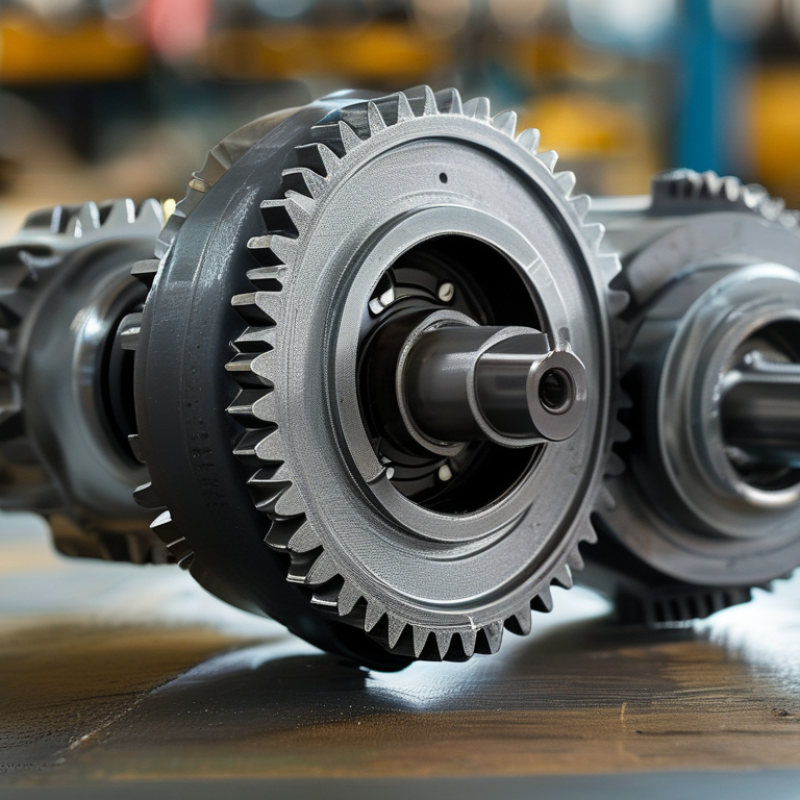
Top Advantages of Plastic Gear Motors for Industrial Applications
Plastic gear motors have gained popularity in various industrial applications due to their unique advantages. One significant benefit is their lightweight construction, which reduces overall equipment weight. This attribute facilitates easier installation and transport. Moreover, plastic gear motors often exhibit a high resistance to corrosion, making them ideal for harsh environments. In industries like food processing, where sanitation is crucial, the non-corrosive nature of plastic is a key consideration.
Another advantage is the noise reduction these motors provide. Unlike metal gears, plastic gears operate more quietly. This feature is essential in settings where noise control is a priority, such as hospitals or laboratories. Additionally, plastic gear motors tend to be more cost-effective than their metal counterparts. While the initial investment might not differ greatly, long-term savings on maintenance and energy consumption can be significant.
When evaluating options, buyers must consider the specific requirements of their applications. Not all plastic materials are suitable for every environment. Some plastics may not endure high temperatures or heavy loads. Careful assessment is necessary to ensure compatibility. Overall, while plastic gear motors offer variety and cost benefits, attention to detail in selection is crucial.
Top Advantages of Plastic Gear Motors for Industrial Applications
Cost-Effectiveness: Analyzing the Savings in Material and Production
Plastic gear motors offer substantial cost-effectiveness for manufacturers and designers. By utilizing lightweight materials, they reduce overall production costs. Traditional metal gears are often heavy and expensive. In contrast, plastic gears are cheaper to produce and transport. This cost-saving mechanism enables companies to allocate resources elsewhere.
Production efficiency is another key advantage. Plastic gear motors often have shorter lead times. They can be produced in high volumes without the excessive costs associated with metal machining. This results in significant reductions in labor costs. However, it is essential to assess the long-term reliability of plastic gears. They might not withstand heavy loads as effectively as metal counterparts.
Moreover, while the initial investment is lower, performance consistency must be monitored. Companies might face challenges in ensuring that plastic gears perform reliably over time. A thorough understanding of the application requirements is crucial. This insight can help mitigate potential issues, making plastic gear motors a viable option for many industries. Reliability should not be overlooked, as it impacts overall productivity and costs.
Weight Reduction: Impact on Equipment Efficiency and Mobility
Plastic gear motors are increasingly becoming a choice for global buyers due to their weight reduction benefits. Reducing weight directly impacts equipment efficiency and mobility, which is crucial for enhancing performance. A report from the International Journal of Advanced Manufacturing Technology states that lightweight components can improve energy efficiency by up to 15%. By minimizing the weight of the motor, overall energy consumption during operation decreases significantly.
This shift towards lighter materials can also lead to improved mobility. Devices with lightweight motors can maneuver more easily in various applications. For example, drones equipped with plastic gear motors can reduce their payload effectively, extending flight time without additional energy costs. However, it’s important to consider that lightweight doesn’t always mean fragile. Some plastic gears exhibit high strength, though they may not withstand extreme conditions as well as metal counterparts.
Tips: When selecting a plastic gear motor, assess the materials used. Look for composites that offer strength along with reduced weight. Also, engineer thorough testing to ensure durability over time, as lighter motors may wear differently under stress. Always balance weight reduction with performance to avoid compromising quality.
Durability and Corrosion Resistance: Longevity in Harsh Environments
Plastic gear motors are gaining attention in various industries due to their unique attributes. One notable benefit is their durability and corrosion resistance. These motors are designed to withstand harsh environments. Industries such as agriculture and marine heavily rely on machinery that operates in moist or corrosive settings. Here, plastic gear motors shine. They resist rust and deterioration, ensuring a longer lifespan compared to metal counterparts.
According to a recent industry report, over 70% of machinery failures result from corrosion-related issues. This statistic highlights the importance of choosing the right materials. The resilience of plastic gear motors allows them to perform effectively even in challenging conditions. They maintain functionality in temperatures ranging from -40 to 85 degrees Celsius. Such specifications are crucial for buyers who seek reliability in operational environments.
However, it’s important to note that not all plastic gear motors are created equal. Quality variations exist across manufacturers. Buyers should be cautious in selecting products. Comprehensive research and expert advice can lead to informed decisions. Looking for consistent performance and longevity is key. The world of plastic gear motors offers exciting opportunities, but careful consideration is necessary for optimal outcomes.
Top Plastic Gear Motor Benefits for Global Buyers
| Benefit |
Description |
Applications |
Longevity Factors |
| Durability |
Able to withstand mechanical stress and impact. |
Industrial machinery, automotive applications. |
Material strength, design robustness. |
| Corrosion Resistance |
Resistant to rust and corrosion from chemicals. |
Food processing, water treatment facilities. |
Environmental exposure, choice of polymers. |
| Lightweight |
Easier to handle and install compared to metal gears. |
Portable devices, consumer electronics. |
Material selection, size optimization. |
| Cost-Effective |
Lower production costs without compromising quality. |
Bulk manufacturing, start-ups. |
Efficient production methods, economies of scale. |
| Versatility |
Can be used in a wide range of applications. |
Robotics, automation systems. |
Adaptability of design, customization options. |
Versatility of Plastic Gears: Adaptability Across Various Industries
Plastic gears are becoming increasingly popular due to their adaptability across various industries. These gears can be tailored to meet specific requirements, which makes them ideal for a wide range of applications. From automotive to consumer electronics, plastic gears serve diverse functions. Their lightweight nature helps in reducing overall system weight, which is essential in sectors like aerospace and robotics.
The versatility of plastic gears lies in their ability to withstand different environmental conditions. They are resistant to corrosion and can operate silently, which is advantageous for household appliances. Additionally, manufacturers can easily mold these gears into complex shapes, resulting in innovative designs. However, it is vital to reflect on the potential limitations of plastic gears. They may not handle extreme loads as effectively as metal gears. This raises questions about their use in heavy-duty applications.
In many cases, the choice between plastic and metal gears can be influenced by cost and performance requirements. Many buyers appreciate the lower production costs of plastic gears, but must also consider durability. Balancing these factors is crucial for successful implementation. The ongoing evolution of materials and engineering techniques may further enhance the performance of plastic gears. This progress will likely influence their future role across industries.
FAQS
: Plastic gear motors are lightweight and corrosion-resistant, ideal for various industrial applications.
Their lightweight construction makes installation easier and reduces transport challenges for equipment.
Plastic gears operate more quietly than metal ones, making them suitable for noise-sensitive settings like hospitals.
Yes, they are often cheaper to produce, leading to long-term savings in maintenance and energy costs.
Buyers must assess material compatibility and application requirements, as not all plastics suit every environment.
While they are generally cost-effective, long-term reliability can be an issue that requires careful monitoring.
Reducing motor weight can enhance energy efficiency, improving overall performance by up to 15%.
Balance weight reduction with strength and durability, ensuring the motor can handle stress without failures.
Some plastic gears may not handle heavy loads as effectively as metal gears, which requires careful application assessment.
Consistent performance is crucial as it impacts overall productivity and can influence long-term costs for companies.
Conclusion
Plastic gear motors offer numerous advantages that appeal to global buyers in various industrial applications. Their cost-effectiveness stands out as a primary benefit, allowing companies to save on material and production costs, making them a great choice for budget-conscious projects. Additionally, the lightweight nature of plastic gear motors enhances equipment efficiency and mobility, enabling easier integration into a variety of systems.
Durability is another significant aspect, as plastic gear motors provide excellent corrosion resistance, ensuring longevity even in harsh environments. This makes them reliable components across industries, from robotics to packaging. Their versatility allows for adaptability, meeting the unique demands of different applications and further establishing plastic gear motors as a valuable investment for businesses looking to optimize performance and reduce operational costs.
