Choosing a supplier is not just a price comparison. A Cylindrical Gear Motor must match the load, speed, duty cycle, and installation space. A unit that looks suitable on a quotation may run hot under continuous operation or struggle with frequent starts. Small details matter. Buyers should check rated torque, service factor, efficiency, noise data, lubrication requirements, and documented testing before comparing offers.
Gear-technology expert Dr. Hermann J. Stadtfeld is known for work on gear design and manufacturing. I could not verify a direct quotation from him about cylindrical gear motors, so I will not invent one. The practical takeaway is simple: “Judge the drive by its operating conditions, not its catalog label.” This is an editorial line, not a quotation attributed to Stadtfeld. It points to a common sourcing risk: specifications can hide assumptions about temperature, mounting position, or operating hours.
This guide examines leading cylindrical gear motor suppliers for global buyers in 2026. It focuses on product range, customization, quality systems, technical support, and export readiness. A supplier’s response to a detailed application brief can reveal more than a polished brochure. Ask for drawings, test records, and clear lead-time commitments. Then compare like with like. Even a careful shortlist has limits; local service coverage and actual site conditions still deserve scrutiny.
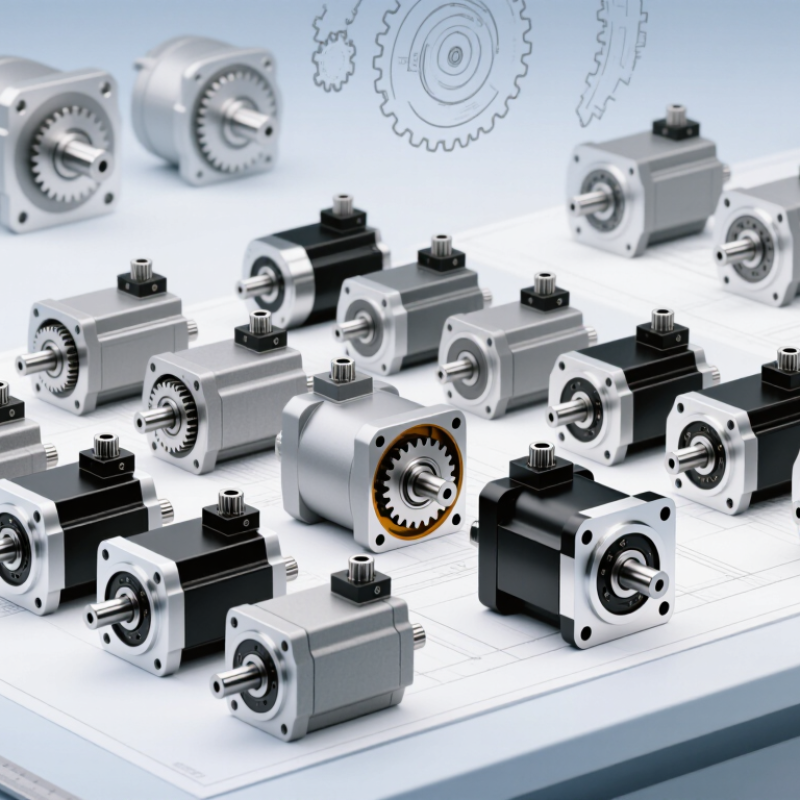
Define Cylindrical Gear Motor Types, Gear Ratios, and Helical Stages
Cylindrical gear motors use gears with parallel axes to reduce speed and increase output torque. Spur gears have straight teeth and are simple to specify. Helical gears engage gradually, usually producing quieter operation and higher contact ratios. They also create axial thrust, so bearing capacity and lubrication matter. Small detail. It can change the selection.
A gear ratio compares input speed with output speed. In a multi-stage unit, the overall ratio is the product of each stage’s ratio. More stages can provide greater reduction, but they add length, losses, and heat. Check required output speed, starting torque, duty cycle, and mounting position together. The International Energy Agency’s 2011 report, Energy-Efficiency Policy Opportunities for Electric Motor-Driven Systems, estimates that motor-driven systems use about 46% of global electricity. That figure makes efficient sizing more than a catalog exercise. A unit that is too large may waste energy; one that is too small may overheat under repeated starts. The U.S. Department of Energy’s motor-system guidance also stresses evaluating the motor and driven equipment as one system. In practice, buyers should ask suppliers for rated torque, service factor, thermal limits, and stage details. A neat ratio on paper is not enough. Real loads can be uneven.
Compare Rated Torque, Output Speed, Power, and 50/60 Hz Options
For global buyers comparing cylindrical gear motor suppliers, rated torque is more useful when matched to the actual load. Check whether the figure applies continuously or only briefly, and ask for the operating conditions behind it. A conveyor carrying uneven cartons may need extra starting torque, while a lightly loaded mixer may prioritize steady operation. Numbers need context.
Output speed depends on the motor’s rated speed and gearbox ratio. A small change in ratio can alter both shaft speed and available torque, so compare complete motor-and-gearbox data rather than motor speed alone. Confirm the required speed at the machine shaft, including any tolerance. Too fast can disrupt the process; too slow may reduce throughput.
Power helps screen options, but it does not replace torque checks. Ask suppliers for rated power, service duty, and thermal limits, especially when the motor runs for long shifts. Frequency matters too: 50 Hz and 60 Hz supply conditions can affect motor speed and performance. Request separate data for each frequency, and verify voltage compatibility. One detail is easy to miss: actual site voltage may vary from its nominal value. Compare curves and test conditions where available, not just headline ratings.
2026 Cylindrical Gear Motor Reference Comparison
Representative rated power, output torque, and output speed points for 50 Hz and 60 Hz operation.
Torque values are calculated reference points using rated mechanical power and output speed (T = 9550 × P / n). The 60 Hz speeds assume the same gear ratio and are 1.2 times the 50 Hz speeds. Actual supplier ratings can differ due to motor design, gear efficiency, service factor, and operating conditions; confirm specifications for each application.
Assess Gear Load Capacity Using ISO 6336 Rating Methods
For 2026 cylindrical gear motor sourcing, compare rated load capacity rather than relying on peak torque alone. ISO 6336 provides methods for assessing cylindrical gear strength, including tooth-root bending and flank contact stress. Start with the actual torque and speed at the gear mesh. Include starts, reversals, shock loads, and daily operating hours. These details affect the load factors used in a rating. A small gear running continuously may face a tougher duty than a larger unit used briefly.
Tips: Request the calculation basis, not just a pass/fail result. Check the stated material, heat treatment, gear accuracy, face width, and lubrication assumptions. Ask whether load distribution across the tooth width reflects the real shaft and housing stiffness. Small misalignment matters.
Use the results to compare suppliers on equal operating conditions. Confirm that the selected ISO 6336 method and factors suit the gear design and application; not every input is easy to verify from a catalogue. A neat spreadsheet can still hide a weak assumption. Treat calculations as engineering evidence, then review them against test data, temperature, noise, and the expected duty cycle. A rating is useful, but it is not a promise of service life under every installation condition.
2026 Top Cylindrical Gear Motor Suppliers for Global Buyers — Assess Gear Load Capacity Using ISO 6336 Rating Methods
| Anonymous Procurement Profile |
Illustrative Motor Input |
Reduction Ratio |
Estimated Output Speed |
Assumed Overall Efficiency |
Estimated Output Torque |
ISO 6336 Assessment for Supplier Verification |
| Compact, low-power application |
0.75 kW at 1,500 rpm |
20:1 |
75 rpm |
90% |
Approximately 322 N·m |
Request gear geometry, material and heat-treatment data. Verify tooth-root bending strength and flank-surface durability under the declared duty cycle. |
| General-purpose industrial application |
2.2 kW at 1,500 rpm |
40:1 |
37.5 rpm |
92% |
Approximately 483 N·m |
Ask for documented ISO 6336 calculations for pitting resistance and tooth-root bending strength, including application and load-distribution factors. |
| Higher-torque conveyor or material-handling application |
5.5 kW at 1,500 rpm |
60:1 |
25 rpm |
90% |
Approximately 788 N·m |
Confirm the rated torque against the actual starts, stops, shock loads and operating hours. Request the relevant ISO 6336 load-capacity results and stated safety factors. |
| Low-speed, heavy-duty application |
11 kW at 1,500 rpm |
80:1 |
18.75 rpm |
90% |
Approximately 1,178 N·m |
Check variable-load duty where applicable, along with gear material, hardness, lubrication, thermal limits and output-shaft limits. A torque estimate alone does not establish gear capacity. |
|
Technical note: The anonymous profiles are comparison examples, not named suppliers or supplier quotations. Speeds are calculated as motor speed ÷ reduction ratio. Torque estimates use T (N·m) = 9,550 × input power (kW) × assumed efficiency ÷ output speed (rpm); the efficiencies shown are assumptions, not guaranteed product data. ISO 6336 capacity must be verified from the specific gear geometry, materials, manufacturing quality, load spectrum and operating conditions. Relevant parts include ISO 6336-1 (basic principles), ISO 6336-2 (surface durability), ISO 6336-3 (tooth bending strength), ISO 6336-5 (material strength) and, where applicable, ISO 6336-6 (variable loads).
|
Compare IE1–IE4 Motor Efficiency Classes Under IEC 60034-30-1
For global buyers comparing cylindrical gear motors, IE labels are a useful starting point, not a complete system rating. IEC 60034-30-1 classifies qualifying AC motors: IE1 is Standard Efficiency, IE2 High, IE3 Premium, and IE4 Super Premium. Exact thresholds depend on rated output, pole count, and frequency, so compare like with like. The standard rates the motor, not the gearbox, seals, or complete drive.
That distinction matters on a conveyor running two shifts: gearbox losses, oversized motors, and frequent starts can reshape real energy use. The IEA’s 2011 report, Energy Efficiency Policy Opportunities for Electric Motor-Driven Systems, estimated that motor-driven systems use about 45% of global electricity.
Small label. Big difference.
For a supplier quote, request test methods and efficiency at the stated voltage, frequency, load, and duty. IEC 60034-2-1 describes motor test methods. IE4 may reduce motor losses, but payback still depends on operating hours, energy prices, and load. A tidy rating is not a tidy plant.
Tips: Ask for a nameplate photo, rated-load efficiency, and gearmotor input-power data. Check whether the quote separates motor efficiency from reducer losses. For variable loads, request data at typical operating conditions, not only full load.
Screen 2026 Global Suppliers by IEC 60529 IP55/IP66 Ratings and Support
Selecting a cylindrical gear motor supplier for global projects requires more than comparing torque and delivery dates. Check each motor’s IEC 60529 ingress protection rating against the actual installation. IP55 indicates protection against dust that may affect operation and water jets; IP66 specifies stronger dust protection and resistance to powerful water jets. Neither rating means a motor can be submerged. Details matter.
Ask suppliers for model-specific test documentation, not just a general product-page claim. Confirm whether the stated rating applies to the complete motor, including terminal box, cable entries, seals, and fitted accessories. Request installation limits, such as permitted mounting position and shaft orientation. A rating can be easy to misread.
Support is part of the screening process. Ask how the supplier handles spare parts, troubleshooting, and technical questions across your operating regions. Check whether manuals include wiring diagrams, lubrication guidance, and clear maintenance intervals. A quick reply helps, but useful answers matter more. No checklist catches every mismatch: site washdown, temperature, and cable routing can change real-world exposure. Share those conditions before comparing quotations.
Conclusion
A reliable Cylindrical Gear Motor selection starts with understanding the gear type, ratio, and number of helical stages required for the application. Buyers should compare rated torque, output speed, power, and compatibility with 50 Hz or 60 Hz supplies, while checking that the chosen combination meets operating demands without exceeding its limits. Gear load capacity can be assessed using ISO 6336 rating methods, which help evaluate factors such as tooth strength and expected service conditions.
Motor efficiency is another important comparison point. IE1–IE4 classes under IEC 60034-30-1 provide a basis for reviewing energy performance, while IEC 60529 IP55 or IP66 ratings indicate the level of protection against dust and water exposure. When screening global suppliers for 2026, consider product documentation, configuration options, technical support, and the ability to provide clear, application-specific ratings.
