The demand for precision and efficiency in industrial applications has made the "Motor With Encoder" a critical component in various sectors. These motors provide real-time feedback, enhancing control and accuracy. As industries evolve, the need for reliable and advanced motor solutions grows. The integration of encoders in motors allows for improved position and speed control.
Choosing the right motor with encoder can be challenging. With countless options available, global buyers must navigate numerous features and specifications. Each choice comes with its pros and cons. Some motors excel in precision but lack robustness. Others may offer durability but compromise on responsiveness. Understanding these trade-offs is essential for making informed decisions.
Buyers should consider factors like compatibility, performance, and cost. The top contenders in the market today showcase a blend of innovation and reliability. As we explore these options, we aim to highlight what makes each motor unique. This discussion will help buyers find a suitable "Motor With Encoder" tailored to their specific needs.
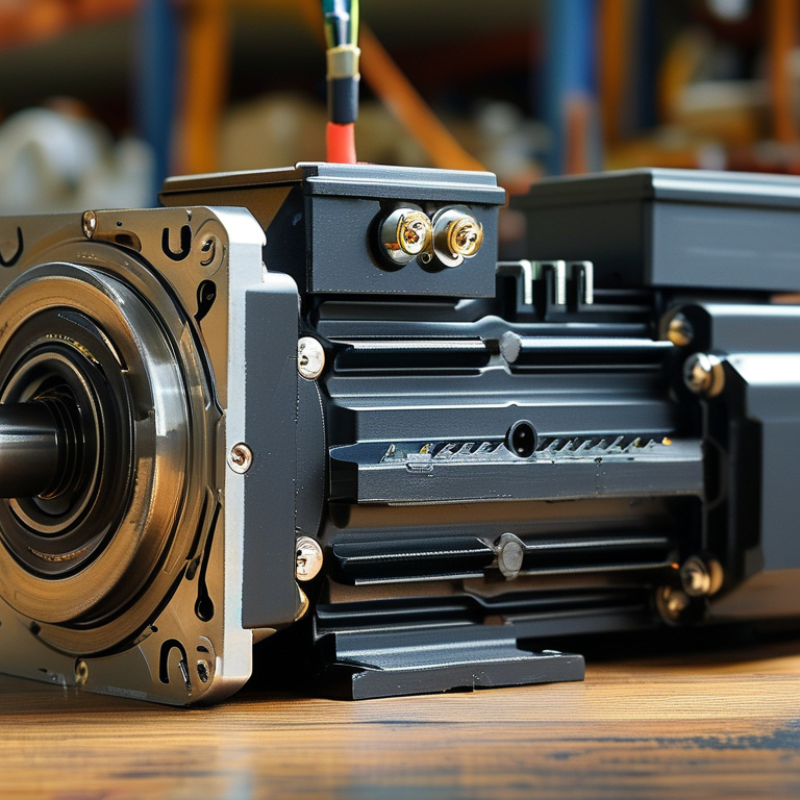
Understanding Motor Encoders and Their Functions
Motor encoders play a crucial role in modern automation systems. They provide precise feedback on a motor's position, speed, and direction. This feedback is essential for applications that require accuracy, such as robotics and CNC machines. According to a report from MarketsandMarkets, the global encoder market is expected to reach $2.8 billion by 2026, growing at a CAGR of 6.2%. This growth highlights the increasing demand for precise motor control in various industries.
Understanding the functions of motor encoders can enhance system performance. They convert the mechanical motion of a motor into digital signals. This transformation enables control systems to adjust motor operations in real-time. Different types of encoders, such as incremental and absolute, serve distinct needs. Incremental encoders offer high-resolution feedback for speed control. In contrast, absolute encoders provide unique position values, reducing errors in complex systems.
Despite their advantages, motor encoders can introduce complexity. Installation requires careful consideration of alignment and calibration. An incorrect setup can lead to errors and reduced efficiency. Additionally, the choice between optical, magnetic, or inductive encoders depends on specific application requirements. Each type has its strengths and weaknesses, which must be balanced against operational needs. Achieving optimal performance often requires thorough testing and validation.
Key Features to Consider When Selecting Motors with Encoders
When selecting motors with encoders, it's crucial to understand key features that greatly influence performance. Precision is paramount. Motors with high-resolution encoders provide accurate position feedback. This is essential for applications requiring tight tolerances. Industry reports indicate that precision in motor control can increase system efficiency by up to 30%.
Another important factor is the communication interface of the encoder. Popular interfaces include SSI and SPI. Choosing the right interface can enhance compatibility with your existing systems. According to recent data, about 40% of system failures relate to poor interface choices.
Thermal management also merits attention. Some motors can operate in extreme conditions. A well-designed motor often includes cooling features, which prevent overheating. Interestingly, research suggests that thermal issues are responsible for nearly 20% of motor failures in industrial settings. It’s clear that making thoughtful selections about features can mitigate potential problems.
Top Applications of Motors with Encoders in Various Industries
In today's industrial landscape, motors with encoders play a crucial role in various applications. They enhance precision and control in systems requiring accurate position feedback. These motors are widely used in robotics, where exact movements are essential. The ability to track real-time data helps increase safety and efficiency in operations.
In manufacturing, motors with encoders ensure meticulous alignment and product assembly. They allow for consistent quality control. Without this technology, production can suffer from inaccuracies. However, implementing these motors might involve a learning curve. Workers may need time to adapt to the technology.
In the medical field, these motors facilitate precise movements for surgical robots. Accuracy is paramount in such applications. Mistakes can have severe consequences. Despite their benefits, the integration of motors with encoders can be complex. Careful planning and training are necessary for successful adoption. These considerations are vital for organizations looking to leverage technology effectively.
Comparison of Leading Brands Offering Encoders in Motors
When exploring motors with encoders, it’s essential to analyze the leading brands in the market. Each brand offers unique features that can influence performance and reliability. Understanding these differences helps buyers make informed decisions. Encoders track motor position and speed, enhancing precision in various applications. This capability is crucial for automation and robotics.
Several brands stand out due to their extensive experience and expertise. They provide a range of models catering to diverse industrial needs. For instance, some offer high resolution and accuracy, ideal for complex tasks. Others focus on durability, ensuring long service life even in harsh environments. Buyers should note that opting for cheaper models may mean sacrificing precision and longevity.
Feedback from users reveals that not all models perform as expected under stress. Some report issues with connectivity, impacting overall efficiency. These insights highlight the importance of thorough research before purchasing. It is advisable to consider real-world applications and reliability, rather than just specifications on paper.
Top 10 Motor With Encoder Options for Global Buyers
| Motor Type |
Encoder Type |
Feedback Resolution |
Input Voltage |
Torque Rating |
Speed Rating |
Pricing (USD) |
| Stepper Motor |
Incremental |
1000 PPR |
24V |
1.5 Nm |
300 RPM |
$120 |
| DC Motor |
Absolute |
3600 PPR |
12V |
2.0 Nm |
2000 RPM |
$150 |
| AC Motor |
Incremental |
2000 PPR |
230V |
3.0 Nm |
1500 RPM |
$200 |
| Servo Motor |
Absolute |
4096 PPR |
48V |
5.0 Nm |
4000 RPM |
$300 |
| Brushless Motor |
Incremental |
2500 PPR |
24V |
4.0 Nm |
3500 RPM |
$250 |
Global Trends in Motor and Encoder Technologies
As industries continue to evolve, the demand for precise motor and encoder technologies has increased. These components are crucial for automation processes, offering enhanced accuracy and efficiency. Trends indicate a shift towards compact designs and advanced features. Smaller, more powerful motors are becoming the norm, allowing for better integration in various applications.
Tips: When selecting a motor with an encoder, consider the specific application needs. Analyze torque requirements and operational speeds. This will help avoid over or under-specifying your equipment.
Another noteworthy trend is the growth of wireless technology in motor control systems. This innovation allows for remote monitoring and adjustments, improving usability. However, compatibility issues may arise with older systems. Users must assess their current setups to ensure seamless integration.
Tips: Regular maintenance of motor and encoder systems is essential. Check for wear and tear frequently to avoid unexpected failures. Implementing a pro-active maintenance plan can save costs in the long run.
FAQS
: Motor encoders provide feedback on position, speed, and direction. This data is critical for precision tasks.
The two main types are incremental and absolute encoders. They serve different operational needs.
Proper installation ensures accuracy. Misalignment can cause errors and lower efficiency in operations.
Encoders convert mechanical motion into digital signals for real-time adjustments in motor operation.
There’s a shift toward compact designs and wireless technology for better integration and usability.
Regularly check for wear and tear. A proactive maintenance plan can help avoid unexpected breakdowns.
Consider specific application needs, torque requirements, and operational speeds to make an informed choice.
Compatibility issues may arise. Users should assess their current systems before adding new components.
They can add complexity. Choosing the right type requires balancing strengths and weaknesses for each application.
Thorough testing is crucial for optimal performance. Validation can minimize errors and enhance operational efficiency.
Conclusion
Motor with encoder technology plays a crucial role in a variety of industries, providing precise control and feedback for improved automation processes. Understanding the functions of motor encoders is essential, as they enable accurate position and speed monitoring, which are vital for enhancing efficiency. When selecting a motor with encoder, key features such as resolution, compatibility, and response time should be considered to meet the specific requirements of the application.
Motors with encoders find extensive usage across sectors such as robotics, manufacturing, and aerospace. The ongoing global trends in motor and encoder technologies emphasize innovations that drive performance and reliability, making these components increasingly indispensable in modern machinery. In summary, choosing the right motor with encoder is paramount for optimizing operational efficiency and achieving superior control in various applications.
